As a regional sales manager, Daniel Tan Wei Ming, 42, often sat in fast-moving meetings. What his colleagues did not know is that while he was nodding to what they said, he only heard half of it.
Weekends brought no relief. During cycling trips along the park connectors, wind made it harder to hear his friends. This was also the case when they gathered at noisy restaurants. Sometimes, he caught the laughter but missed the joke.
This went on for five years, but everything changed when he started using hearing aids from 20dB Hearing, recommended by his uncle.
Finding the right hearing aids
Hearing his uncle speak well of the care he received at 20dB Hearing gave Tan the push to stop putting off a problem that was already affecting his work and social life.
His journey started with an hour-long hearing assessment with 20dB Hearing.
The results showed moderate to profound sensorineural hearing loss, says Pravena Nantha Balan, an audiologist at 20dB Hearing. This affects the inner ear and the nerve pathways that send sound signals to the brain.
Given his hearing loss and active lifestyle, Tan was recommended the Phonak Audeo Eon Sphere hearing aids, which he tried on after his assessment.
Afraid they would be bulky and be very obvious, Tan had been holding back from using hearing aids.
“I was surprised how different it was from what I imagined,” he says. “They feel light and far less noticeable than I expected.”
The Eon Sphere is a receiver-in-canal hearing aid. The main unit sits behind the ear, and a thin wire leads to a small receiver in the ear canal, so little of the device shows.
It is also 25 per cent smaller and 20 per cent lighter than the previous Sphere model.
Beyond its compact build, the Eon Sphere packs several features designed to help wearers follow conversations as their surroundings change.
Its dedicated Hypersonic AI chip powers Spheric Speech Clarity 3.0, which is designed to separate speech from competing sounds in real time.
“Think of this technology as a system that helps distinguish speech from surrounding background noise,” says Cheryl Wong, an audiologist at 20dB Hearing.
This feature can be useful in situations Tan often finds himself in, such as meetings where several colleagues speak in quick succession or dinners where conversations overlap. By helping to bring speech into clearer focus, the technology can reduce the effort needed to follow what is being said.
These advanced hearing aids also adapt as the listening environment changes. The operating system AutoSense OS AI 8.0 can recognise different surroundings and automatically adapts to different listening environments, says Wong.
For Tan, that means the settings can seamlessly adjust as he moves from a quiet office to a busier room or when he heads outdoors, where wind noise can become a distraction.
Bluetooth connectivity is another practical feature, allowing him to stream audio from compatible phones and other devices directly to his hearing aids during calls and online meetings.
Tan says the listening guesswork that once wore him down has eased.

The Phonak Audeo Eon Sphere hearing aids are compact, with a dedicated AI chip designed to separate speech from background noise in real time and adapt automatically.
PHOTO: 20DB HEARING
Hearing well, even on the move
The hearing aids also solved another problem: the interruption caused by wind. This is a common challenge for hearing aid users when cycling, jogging or walking briskly, because the microphones are exposed to moving air.
“Rather than hearing a gentle breeze, users may experience a low-frequency rumbling,” says Wong. The sound is similar to when we blow air onto a microphone.
This can make conversations harder to follow outdoors, and some users take their hearing aids off during activities when the noise becomes too distracting, she adds. Without them, they may also be less aware of their surroundings, such as an approaching vehicle.
The Eon Sphere tackles this with WindBlock 2.0, a feature that targets low-frequency wind interference while preserving more of the surrounding sounds.
It is designed for everyday outdoor activities, though Wong notes that it is not complete windproofing, particularly at high speeds.
For Tan’s weekend rides, it made a difference. On his first ride wearing the hearing aids, he noticed far less wind noise than expected.
When fitting someone with an active lifestyle such as Tan, audiologists check comfort, fit and exposure to sweat, so that the hearing aids stay secure through a jog or ride.
Depending on the individual’s ear shape and activity level, an audiologist may also recommend a retention accessory such as an anchor to hold the device firmly in place.
“Hearing aids are not designed to remain secure under every type of movement,” Wong adds, so vigorous or contact sports are assessed case by case.
Sweat is less of a concern. The Eon Sphere’s IP68 rating means it resists sweat and dust under certain conditions. It should still be removed before swimming or bathing.
After a sweaty ride, a quick wipe with a tissue and cleaning spray before charging keeps it in good condition.
With up to 38 hours of battery life on a full charge, the hearing aids can see Tan from a morning jog through a full workday and beyond. Wong adds that actual battery life varies depending on usage.
Together, these features mean Tan no longer has to choose between staying active and managing his hearing – something he used to do.

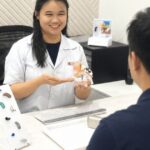
Audiologist Pravena Nantha Balan says follow-up care after fitting that includes lifetime fine-tuning is important as hearing needs can change over time.
PHOTO: 20DB HEARING
Support beyond the first fitting
Technology is only part of hearing better. The care Tan received at 20dB Hearing also made a difference.
Before committing to a device, potential customers can take a demonstration set home for up to seven days and try it in the situations that trouble them most.
“The trial gives customers time to get familiar with the devices,” says Pravena. They can then discuss any feedback or concerns with their audiologist before deciding.
“For the first time in years, I didn’t leave a meeting feeling drained,” says Tan.
Once Tan made a decision, his hearing aids were fitted and programmed to his hearing profile, a process that typically takes one to one-and-a-half hours.
Like most first-time users, he then needed time to get used to them.
“This adaptation period can vary from person to person and may take approximately one to four weeks,” notes Wong.
That is where follow-ups come in. Patients who purchase their hearing aids from 20dB Hearing receive lifetime aftercare, including follow-up appointments and fine-tuning for as long as they use the devices.
At these sessions, the audiologist reviews how the hearing aids are performing in daily life, adjusts the settings and guides customers on using and caring for them.
This matters because a wearer may need different settings in meetings, at a busy dinner or out on a ride, and those needs can change over time.
“Patients are usually seen by the same audiologist for all their follow-up appointments,” Pravena adds.
That continuity means Tan’s audiologist already knows his hearing history and lifestyle, so each adjustment builds on the last.
Between visits, Tan can also fine-tune his hearing aids himself on the myPhonak app, from volume and streaming balance to custom programmes for different settings.
“Knowing that support remains available gives me greater confidence in making hearing care part of my long-term routine,” says Tan.
Book a complimentary hearing test and consultation with 20dB Hearing to better understand your hearing health and explore suitable options.