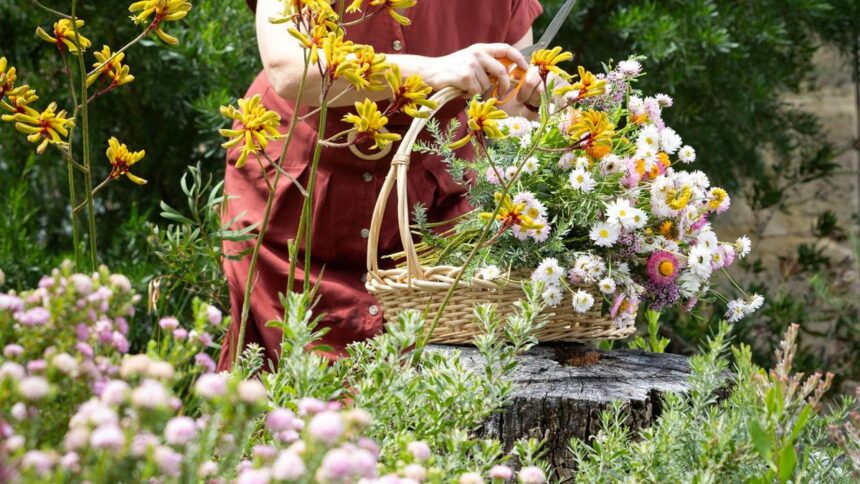
Growing WA natives can have a dramatic effect on you. Wembley Downs couple Ranka and John Joyce share a passion for natives that is palpable as they enthusiastically share the changing of a conventional landscape containing agapanthus, roses, lawn, frangipanis and three palms, with a densely planted WA garden that’s a haven for wildlife.
It began when the decision was made to remove the unused swimming pool about five years ago. A post on their Buy Nothing page asking for help led to architect Kat Schnell. Inspired by Wildflower Society talks and Gardening Australia, the couple embraced the Miyawaki method of improving the soil and densely planting local species. Their garden follows the principles of a woody meadow, with multiple layers of plants packed closely together to create habitat.
“I plant the way I cook for my friends and family,” Ranka says. “Too much is never enough and now I garden the same way that I cook.”
Plants have been carefully selected for a small garden. The couple concentrated on coastal species, first adding a thick layer of mulch and then planting directly into the existing dead lawn.

Good soil preparation has been fundamental. Plants are given deeper planting holes, and the soil is improved with kaolin clay and native fertiliser. Their water wise approach has resulted in an impressive 90 to 95 per cent success rate.
The numbers are remarkable, with about 800 tube stock plants grown representing 70 different varieties. There is always something flowering, attracting an ever-growing list of birds and providing plenty of opportunities for birdwatching. Birdbaths, shallow bowls, rocks and logs add further habitat for wildlife, including reptiles.

Once the former pool area was completed two years ago, the transformation of the verge was next. John and Ranka see it now as a community asset, supporting the NatureLink Perth vision of connecting parks and homes with habitat. In collaboration with the City of Stirling, the couple hosted a Verge Viewing initiative, which has brought even more attention, with the council supportive by offering plants to participants.

Through Facebook posts, including Re-VERGE, the couple have encouraged others to join the movement. Seed sharing has led to new friendships, while inviting people into their garden has allowed them to share knowledge.
Ranka spends most mornings micro-weeding, which keeps the densely planted garden under control, but the rewards far outweigh the work and connects her with her community. “I feel like it’s a movement,” she says. “Initially, there’s a lot of work, but there’s just so much to gain.”

Gardening by honouring the Noongar seasons, encouraging native plants and creating habitat, John says he continues to be blown away by the diversity of Australian plants.
“I now feel more connected to this land and am so protective of it,” he said.