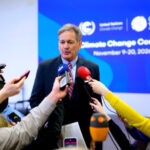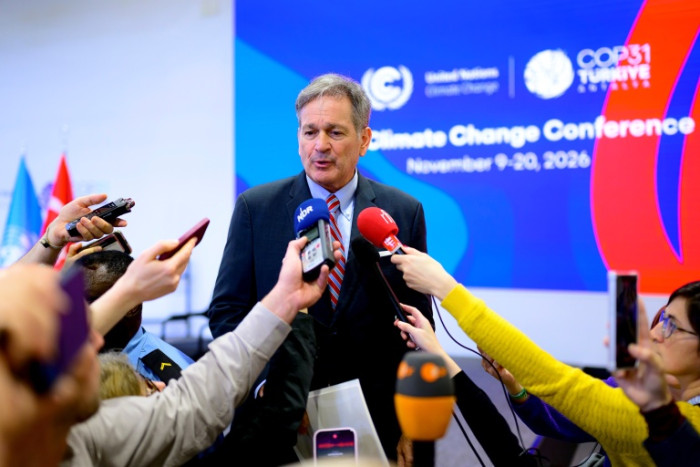
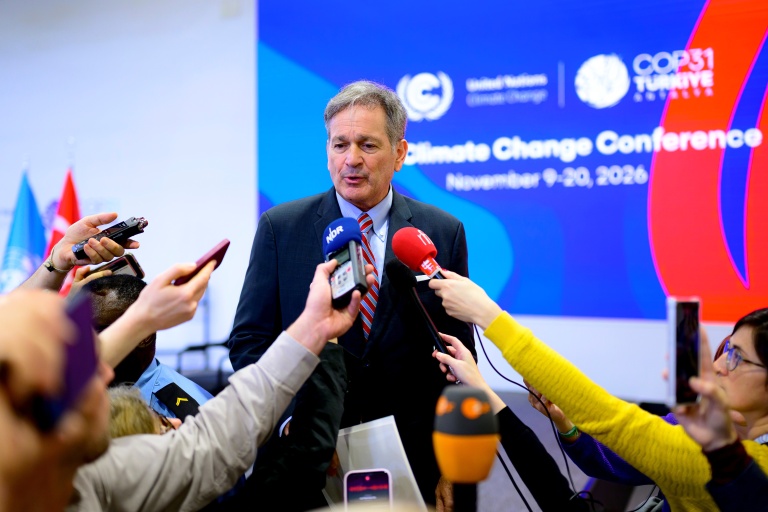
ANTALYA, Turkey – Denouncing the “sins” and “hypocrisy” of oil-producing countries, the environment minister for “carbon-negative” Panama has emerged at this week’s United Nations climate negotiations as a forceful voice against fossil fuels.
While powers such as Russia and Saudi Arabia are resisting an international agreement on phasing out oil, coal and gas, Juan Carlos Navarro has taken aim at the industry that is driving devastating climate change.
The UN summit, involving negotiators from around 200 countries, coincides with stark reminders of the urgency of climate action — from heatwaves in Europe to floods in Nepal.
Soaring oil prices have added complexity to the talks, sharpening divisions over the future of fossil fuels.
“We’re being held hostage by the petroleum mafia,” Navarro said on Wednesday at an event alongside his counterparts from Vanuatu, Fiji and Tuvalu — island nations endangered by the heating of the planet.
“The petroleum guys… are so smart. They have convinced us that they are actually doing this for our own good. They torture us for our own good.”
Fossil fuel ‘hypocrisy’
Navarro — a former mayor of Panama City and co-founder of the renewable energy firm NSolar — said richer countries should pay for the damage that human emissions of greenhouse gases are causing to the planet.
“Why should countries like Panama or Vanuatu or Palau or Fiji pay the price for the sins of oil-producing countries and developed nations that loaded the atmosphere with carbon dioxide?”
On Thursday he raised the stakes at the UN summit (called COP31), vowing to block any deal that does not satisfy his country’s “principles” and “values”.
These include a cap on oil production and an insistence that climate policy be based on UN climate science reports.
In a letter, Navarro’s delegation demanded an immediate and proportional contribution by oil-producing nations to help vulnerable countries cope with climate disasters.
Panama also wants decisions at the annual UN climate negotiations to be taken by a majority vote. At present they require the unanimous support of all governments involved.
Energy transition investment
Navarro argued that more countries should help developing nations financially to move away from fossil-fuel energy.
“I’m not… advocating a petroleum or energy shock,” he told reporters earlier in the week.
“What I am saying is: maintain the current levels of petroleum production and consumption where they are, while we invest in the most rapid possible orderly transition to renewables.”
The demand is aimed in part at reluctant Gulf states.
These oil-producing states argue that under a UN framework they are classified as “developing” countries and therefore do not bear the same obligations as Europe, Japan, the United States or Canada.
“I hope all developing countries that have the resources, particularly oil producers, will contribute,” Navarro said.
“This game of insisting that only developed countries should pay is hypocrisy on a grand scale.”
Panama: carbon-negative
Panama’s letter to the COP31 chairs invoked the central American country’s “moral authority” as a nation whose government has described it as “carbon-negative”.
According to government figures, its forests and mangroves absorb more greenhouse gases than are emitted by all other sectors of the economy.
Hailing Panama’s environmental achievements, campaigner Carolina Sanchez told AFP it represents “one of the most important examples of civil society mobilisation” in Latin America in recent years.
Sanchez is a spokeswoman for the Fossil-Free Greater Caribbean Network of 40 grassroots organisations from across the region.
In 2023, a historic social movement in Panama secured a moratorium on environmentally damaging mining.
But, Sanchez cautioned, “in our countries we always know that, domestically, this remains an ongoing struggle”.
Panamanian President Jose Raul Mulino’s government this week announced negotiations to revive a copper mine in the country’s Colon province, the largest open-pit operation in Central America.
The move prompted a protest in the capital on Tuesday.
Countries at the COP31 talks are trying to hammer out a deal before the negotiations are scheduled to wrap up on Friday.
Navarro said Panama would “not lend its name” to “complacent or ineffective language” in the final pact.