SINGAPORE – Singapore is working to maintain its reputation as a trusted business hub, tainted by allegations that Chinese companies had exploited it to gain access to top-end AI chips despite US export restrictions.
A widening scandal sparked by an affair between Jensen Huang, until recently head of US chip titan Nvidia, and a suspected Chinese spy has spotlighted the city-state’s position as a global crossroads for the advanced semiconductors that power artificial intelligence.
The United States on Monday moved to close a loophole in its controls — which it says protect national security — on the export of powerful AI chips to China.
The new US rules crack down on illicit chip smuggling, but also the large grey market of Chinese companies renting computing power from data centres full of advanced Nvidia chips in third countries, often in Southeast Asia.
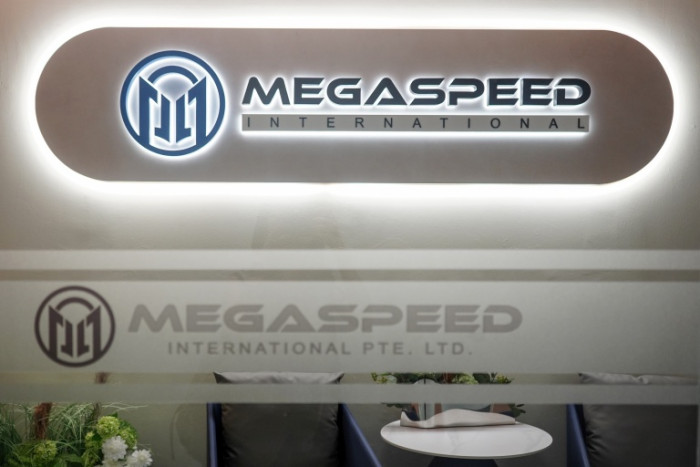
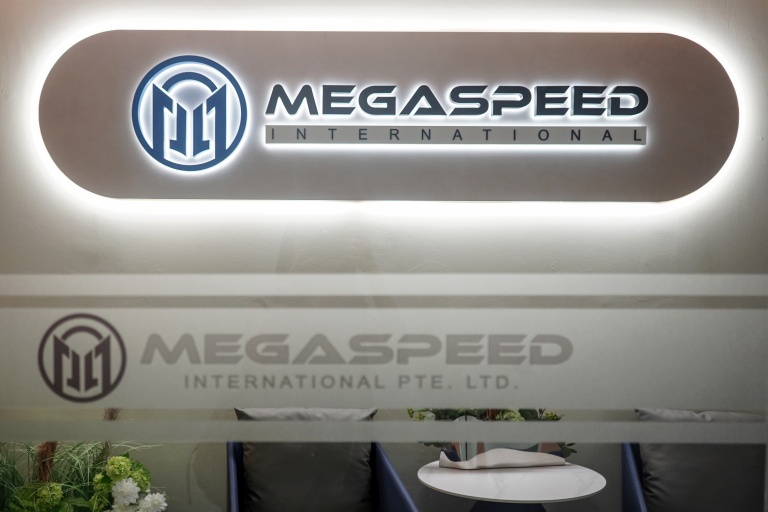
It follows explosive reports of Huang’s affair with Alice Huang, a former executive at the Singapore-based cloud computing company Megaspeed International, which Washington is investigating for the alleged transfer of Nvidia chips to China in circumvention of US rules.
The scandal “is obviously not a good look for Singapore”, Chong Ja Ian, a political scientist with the National University of Singapore, told AFP.
Singapore is also probing what Megaspeed was up to, but Chong said the city-state must strengthen regulatory oversight to avoid the perception of “systemic issues”.
The Nvidia case may make it harder “to maintain the reputation of being a clean business hub by simply dealing with individual cases, rather than putting more stringent regulations and laws in place”, he said.
Some US officials also reportedly believe that Alice Huang, no relation to the leather jacket-clad Jensen, was spying for Beijing.
Caught in crossfire?
Singapore said it was carefully studying the new US measures, which require data centres worldwide to hold a US licence to provide a large volume of computing power from advanced chips to companies headquartered in China, or other places under US arms embargoes.
A US licence will also be needed to ship advanced chips to Singapore, Malaysia, Thailand, Indonesia and Brazil — countries the US commerce department says present a “higher-than-normal risk of diversion” of the sensitive components.
“We take our international reputation seriously,” the Singaporean government said.
The city-state does not “condone companies using their association with Singapore to circumvent or violate the laws of other countries in their international business activities, including export controls”, it said.
Some analysts said Singapore was grappling with factors largely beyond its control, caught in the crossfire of US-China tech rivalry.
Nvidia controls an estimated 90 percent of the market for chips used to train and run AI models, and Washington began restricting their sales to China four years ago.
“The responsibility for such export controls should primarily rest with the government issuing” them, “rather than outsourcing enforcement of laws to other jurisdictions”, said Rajiv Biswas, chief of the risk consultancy Asia-Pacific Economics in Singapore.
“Singapore has already been taking strong enforcement measures in a number of previous cases where companies have used Singapore as a transhipment point for restricted high-tech AI chips.”
‘Open-door policy’
Megaspeed — which before 2023 operated under a different name as an arm of a Chinese video game developer — reportedly traded in upwards of $4 billion worth of Nvidia chips over just two years.
A financial trail weaving through Singapore, Malaysia and the Cayman Islands suggests Megaspeed’s business may have been boosted by a connection to Chinese tech giant Alibaba.
Singapore has positioned itself as a “critical node” in the global semiconductor supply chain — attracting more than $23 billion in investments between 2022-25.
The city accounted for “one in 10 chips and one in five semiconductor equipment units worldwide”, its economic development board says.
Singapore is seeking to attract further investment from tech giants, but its vulnerabilities to global business flashpoints have been underscored as a small, open economy.
Lian Jye Su, chief analyst at the tech research firm Omdia, described the Megaspeed scandal as an “isolated controversy” borne of various factors, including a recent change of guard in the United States following midterm elections.
Singapore “will continue to be exposed to controversies like this due to its open-door policy when it comes to trade and commerce”, he told AFP.
“I believe the government will do whatever it can to exert more regulatory oversight.”