SINGAPORE – Singapore is deepening its partnerships with overseas humanitarian organisations to strengthen the last-mile delivery of assistance to communities affected by the crisis in Gaza.
Singaporeans will also have more ways to contribute, including a new fund-raising campaign for food, water, sanitation and essential medical supplies for affected Palestinians ahead of winter.
Speaking to the media from Egypt on Nov 13, Acting Minister-in-charge of Muslim Affairs Zaqy Mohamad said Singapore has, since 2023, contributed more than $25 million in humanitarian aid for Gaza.
“But we know that goodwill alone is not enough. What matters is also getting help to families who need it,” he said, noting that access to Gaza has improved since earlier in 2026 but remains challenging.
Despite an agreement for at least 600 aid trucks to cross the border each day, non-governmental organisations say only about 200 trucks are able to do so daily, Zaqy noted.
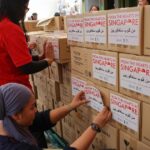
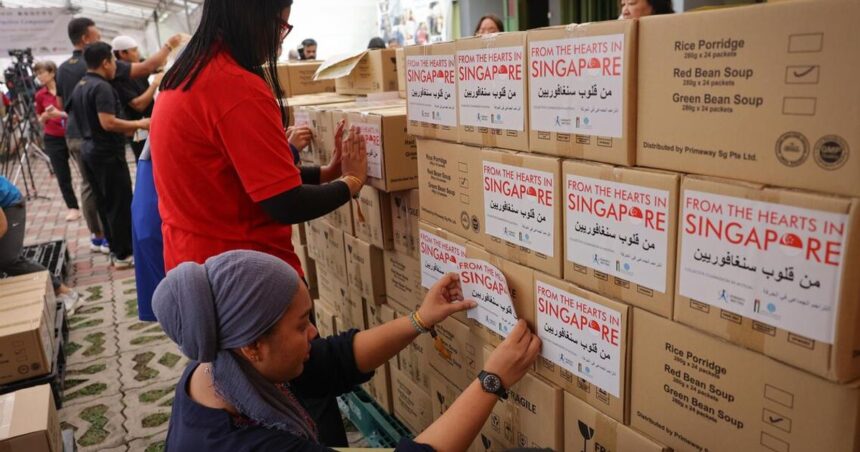
That is why Singapore launched SG for Humanity earlier in November. The network brings together established local non-profit groups, the Government and the community to strengthen the Republic’s collective humanitarian response for Gaza.
Four groups are involved: Humanity Matters, Mercy Relief, Rahmatan Lil Alamin Foundation (RLAF) and Singapore Red Cross, which have been raising money and providing relief supplies.
One new agreement, signed between RLAF and the Egyptian Red Crescent (ERC) on Nov 12, expands cooperation on relief and recovery efforts for families in Gaza and Palestinians displaced to Egypt.
To support the partnership, RLAF will launch its Aid for Gaza 2027 fund-raising campaign later in 2026, with a target of at least $1.5 million in donations. Funds raised will go towards initiatives such as community kitchens and hot meals, sanitation and hygiene supplies and winterisation and shelter assistance.
This builds on a June 2026 agreement that saw RLAF donate more than $754,000 to ERC to support children and families in Gaza, as well as those displaced to Egypt.
Singapore Red Cross will commit a further $200,000 to its ongoing humanitarian response with ERC, for winterisation kits, food parcels and other essential assistance. This brings its total commitment so far to $958,000.
Mercy Relief will provide hot meals, food parcels and livelihood assistance to 7,800 beneficiaries in Gaza from November 2026 to February 2027.
The humanitarian agency will also provide weekly hot meals to another 850 children and teachers across four temporary learning spaces and support local livelihoods by sourcing from smallholder farmers and women’s food-processing groups.
Humanity Matters will provide lightweight winterised blankets to displaced Gazan patients and caregivers at the Palestine Hospital in Egypt, as well as tents and tarpaulins for those affected by winter floods.
While it can be challenging for individual humanitarian groups to navigate the logistics, approvals and protocols on their own, the SG for Humanity network will enable them to bring their networks together, avoid duplication and reach more families.
They can also draw on the Government’s resources, which could include support from its embassies, relevant ministries and the Islamic Religious Council of Singapore, as well as access through military or health channels where appropriate, said Zaqy.
The network aims to sustain humanitarian efforts to alleviate the Gaza crisis, while ensuring that groups are partnering with the right entities in Egypt and in Palestine, the minister added.
Zaqy, who visited Saudi Arabia and Egypt on his trip, also toured the ERC Logistics Centre and the Rafah Crossing area in North Sinai and visited the Palestine Hospital in Cairo.
He said the visit underscored the suffering faced by families affected by the conflict, including those living in tents as winter approaches and patients who have travelled from Gaza to Egypt for treatment.
NGOs and agencies in Egypt told him they were heartened that Singapore continues to focus on Gaza amid concern that attention could shift towards wider conflicts in the Middle East.
Zaqy noted that Singaporeans continue to be keen to contribute beyond financial donations.
For instance, madrasah students studying in Egypt have helped the ERC and told him that other classmates also want to volunteer. Doctors have also asked whether they could send medical teams to the region to assist, and Zaqy said discussions are under way.
The latest efforts come as heavy rains and strong winds battered Gaza in recent days, destroying or damaging some 24,000 family shelters, according to Egyptian reports.
Mercy Relief chief executive Leon Yip said humanitarian access remains one of the biggest challenges in Gaza, with restrictions on entry and movement of supplies rendering assistance inconsistent.
Needs on the ground are also changing rapidly and can be compounded by other crises, such as the recent floods.
“We constantly have to understand the shifting situations and challenges that our partners on the ground have to face to achieve the outcomes of our humanitarian efforts that we want to achieve,” he said.
Zaqy said that while there is a perception that the issue matters only to the Malay/Muslim community, he has observed that other Singaporeans are also concerned.
“I think there is a wider group, especially among our youth, who wish to help and who wish to do something,” he said.
“We’ve seen an outpouring of sentiment and compassion in Singapore, and we want to harness that, challenge that positively, and enable them and assure them that (their help) will reach the end beneficiaries.”
Singaporeans and local organisations keen to contribute to or collaborate on SG for Humanity initiatives can register their interest at go.gov.sg/sgforhumanity