Victoria’s Labor and Coalition parties have both gone through a sustained period of instability during this past parliament, with multiple leadership changes in the years ahead of this month’s state election, not to mention the state government’s Big Build scandal.
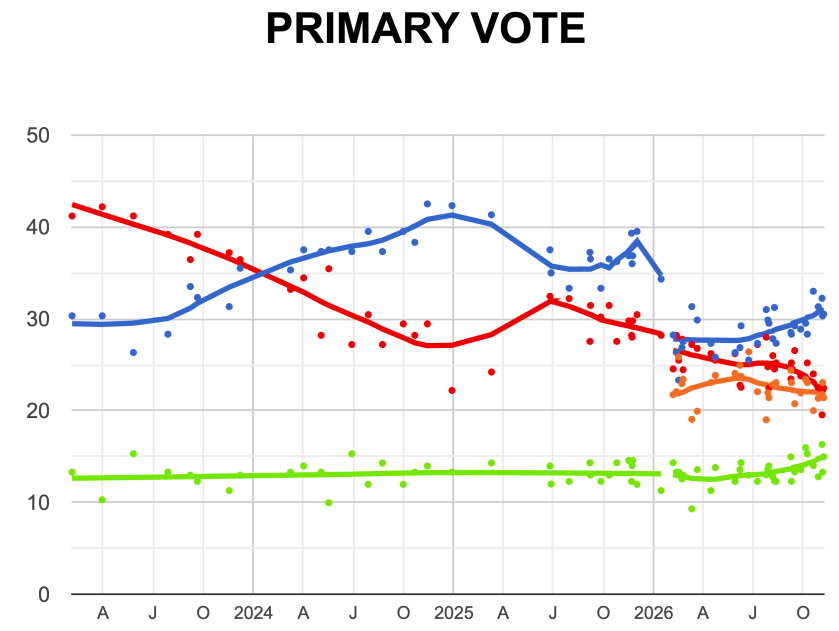
Labor is now heading for what could be a historic defeat, having lost 14.9 percentage points since the last election according to a tracked run by election and polling website The Poll Bludger.
One might think this would be the perfect opportunity for the Greens to capture a sizable chunk of the voters lost by Labor. However, the party has picked up only 3.4 percentage points since the 2022 election, according to the same poll tracker.
Visually, this looks like a red Labor curve pointing downwards, with an almost flat Greens line underneath.
As always, there will be only one poll that matters: the final vote count on November 28.
If, as projected by a new DemosAU/PremierNational poll on November 9, the Greens end up on 17%, with the Coalition winning 33%, One Nation 21% and Labor 18%, it will be a huge upset, the underlying causes and consequences of which will take time to unpack.
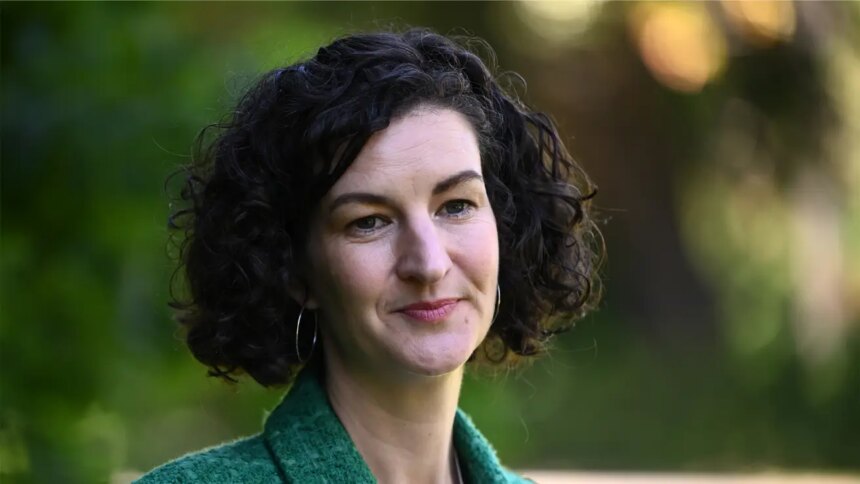
Greens leader Ellen Sandell, for her part, says that kind of Greens result would be a success.
“I think that there’s been a lot of talk about the rise of One Nation, and people have missed this other story about the rise of the Greens,” she told the ABC’s 7.30 this week. “The last election we polled 12% and now we’re polling 16%, 17%, 18%. That is a huge increase.”
Related Article Block Placeholder
Article ID: 1268887
But some still can’t shake the feeling the Greens should be able to pick off more of the Labor vote in an environment like this.
“The Greens should be the third force in Victoria. We’re the most progressive state,” former Greens upper house MP Nina Springle told Crikey, saying that the party only picking up 3.4 percentage points in the wake of Labor’s decline was “crazy”.
“Hardcore-left Labor voters are not going to vote for One Nation, but there are probably a lot of other sort of Labor voters that will. The Greens could have picked those up if they had been smarter about it: talk to the people in the suburbs, make sure you appeal to them. But the Greens are fixated on the inner city, and it plateaus their vote.”
Springle said the Greens had not made themselves visible enough to voters, and that the party struggled to get its messages across.
“I know the Greens have always had a bit of a problem getting proactive media — unless you’re following the Greens, you don’t hear anything from them,” she said.
That opinion is partly borne out by data provided to Crikey by media monitoring company Streem, which shows the Greens got just 14.3% of the media mentions across online, print, radio, TV, podcasts and magazines between the start of the campaign on September 1 and November 9. Labor received 33.1%, the Coalition 26.7%, and One Nation 25.9%.
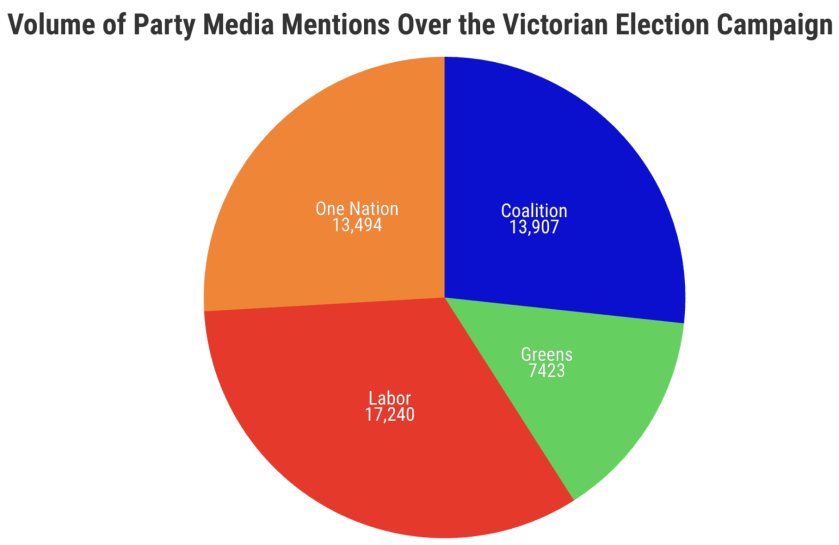
The Streem data also shows the Coalition has made the greatest number of announcements during the campaign, with 85 from the Liberals and 39 from the Nationals, compared with Labor’s 105. The Greens have made six, and One Nation only two, according to Streem’s count.
The Liberals’ promises would be most expensive, with $9.07 billion in costs compared to Labor’s $8.48 billion. The Greens have made promises that would cost $5.28 billion.
One Nation’s promises have not been costed.
The Streem data shows education received the most attention during the campaign, followed by health, infrastructure and crime.