As soon as my plane touched down in the United States, podcasts and various phone apps started serving me local political ads, telling me in no uncertain terms that I’d just landed in a country gripped by the midterm elections.
Every election has a familiar script: the president’s party is under pressure; the opposition hopes to capture Congress. In 2026, the political drama over the struggle to control the House and Senate is more intense than ever. In the Senate, 35 seats are up for election, while dozens of House contests could help determine which party controls the chamber, and potentially Congress, too. The consequences for both parties are significant.
But that national picture of party control isn’t the only perspective on the midterms. After landing in the US on a double-decker Airbus A380 from Sydney, I transferred to a small plane bound for Fargo, a regional centre made famous by the 1996 Coen brothers film and the most populous city in North Dakota — perhaps comparable to Wollongong, NSW, in terms of size and population.
Related Article Block Placeholder
Article ID: 1270253

Perhaps unsurprisingly, the vibe of the election being a “life and death contest” (in the words of a New York-based friend) seemed somewhat muted here. In some states, including North Dakota, no US Senate seats are up for grabs this time around, and no gubernatorial elections will take place either. North Dakota is represented by just one “at-large” representative in the House and by two senators in the upper chamber. All three are Republicans: the two non-contesting senators, and representative Julie Fedorchak, who faces Dem-NPL candidate Trygve Hammer in what’s regarded as a no-contest win for Fedorchak.
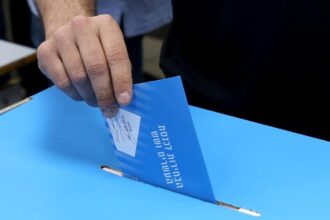
However, getting into a car in Fargo and driving for more than three hours, deep into a small rural farming community called Harvey, the meaning of the midterms begins to change the farther you are from large urban areas. In a place like Harvey, with a population of around 1,500 people, the elections are always two-pronged battles: the national struggle for control of Congress, but also the state and local struggles over public policy and the rules of governance.
This year, many voters in North Dakota will cast their ballots mainly on two state-based issues: “Measure 1” is a legislatively referred constitutional amendment that proposes raising the threshold for approving future amendments to the North Dakota Constitution from a simple majority to 60% of the vote. This measure might sound like a technical adjustment to electoral procedure, but it is in fact a debate about political power and the relative importance of the status quo: how easy should it be for voters to change their state’s fundamental laws?
The argument reaches beyond the arithmetic of a ballot count. Supporters of a higher threshold can argue constitutional changes deserve broad consensus. Opponents can argue that requiring substantially more than half the electorate to agree makes it harder for a majority to exercise its democratic rights. For instance, in 2018, voters in North Dakota voted 54% in favour of a constitutional amendment establishing an ethics commission, with rules addressing lobbying, conflicts of interest and foreign donations. Should the proposed increase to 60% be adopted, this amendment would have failed, and the ethics commission would not have been created.
Since arriving in Harvey, I’ve been bombarded with ads on YouTube urging me to vote “No” on Measure 1, while TV ads are urging me to vote “Yes”. Patti, the author of a letter to the editor of the local Harvey weekly newspaper The Herald-Press argued that North Dakotans should continue to have their current level of power to propose and enact laws, reject actions of the legislature, and argue for constitutional amendments. She therefore urges people to vote “No” on Measure 1.
Related Article Block Placeholder
Article ID: 1270587

On the other hand, Sigrid, a local woman in her 70s whose husband is a farmer and who I spoke to at the town’s church, told me she will vote “Yes” because she is in favour of maintaining the legislative status quo, and wants to make it harder for people new to the area to initiate changes to the current constitution and laws. She is concerned that if this proposal is not adopted, this may continue to give “left-wing activists from California” the opportunity to exploit the lower threshold for legislative and constitutional change, and thereby to exert political influence in her state.
Then there is Measure 2, which proposes that all public and charter schools provide one free breakfast and one free lunch each school day to all enrolled K-12 students. Sigrid intends to vote “No”, not because she believes school children should go hungry, but because she thinks universal school meals aren’t a constitutional matter and decisions should remain with elected officials. She is also worried the proposal could be used as an excuse to access the principal of the North Dakota Legacy Fund for less-than-noble purposes.
Jack, her farmer-husband, also intends to vote “No”, but on the grounds that parents should not expect hand-outs from the government for what he believes to be parental responsibilities. Unlike Sigrid and Jack, Patti — who also lives locally — believes school meals are an important way of dealing with hunger and the social stigma of poverty because, as she writes, “families are facing rising costs for food, fuel, insurance, housing, and healthcare”.
The fact that representative Fedorchak’s seat seems highly unlikely to be in play this midterms doesn’t mean federal politics are irrelevant. Farmers in North Dakota who grow soybeans, corn and wheat, among others, depend on export markets and federal farm programs, and decisions made in Washington about tariffs and international trade can affect the prices they receive for crops, as well as the cost of fuel, fertiliser and equipment. The absence of a dramatic contest to flip a congressional seat does not mean an absence of consequential choices.
But the debate surrounding the two measures illustrates something easily lost in national election coverage: political choices do not always arrive wearing a party label. Sometimes they arrive on a lunch tray. The ideological contest about increased voter majority and free lunches for school kids is between the conservative ideology of a smaller state and individual responsibility, on the one hand, and a liberal ideology of people power, a larger governmental role, and socioeconomic justice and equality, on the other.
On November 3, Americans will vote in the same midterm elections, but they will not all be voting on the same political story. And while Jack and Sigrid are definitely voting, they are less sure about their grandchildren — the younger generation farmers in the family — who may be keen to get the corn harvest finished before the snow comes, rather than sacrificing valuable daylight hours getting to the polling station.