“The smart money is on Mr Keating,” one commentator observed in the middle of the 1996 election, when the polls were showing a looming landslide to the John Howard-led Coalition.
The “smart money” turned out to be very wrong and a reflection of recency bias. Because Keating had achieved what was considered a miraculous win in 1993, it was expected he would somehow pull off another miracle. Alas, for Labor, Howard was in no mood to gift his opponents yet another election by outlining a significant policy agenda on which Keating could paint a target. In fact, the Coalition was so terrified of repeating John Hewson’s error from three years before that Howard went into the election with virtually no major policies except to “never, ever” introduce a GST, and a bunch of spending promises, many of which were junked as “non-core” afterwards.
Related Article Block Placeholder
Article ID: 1270711

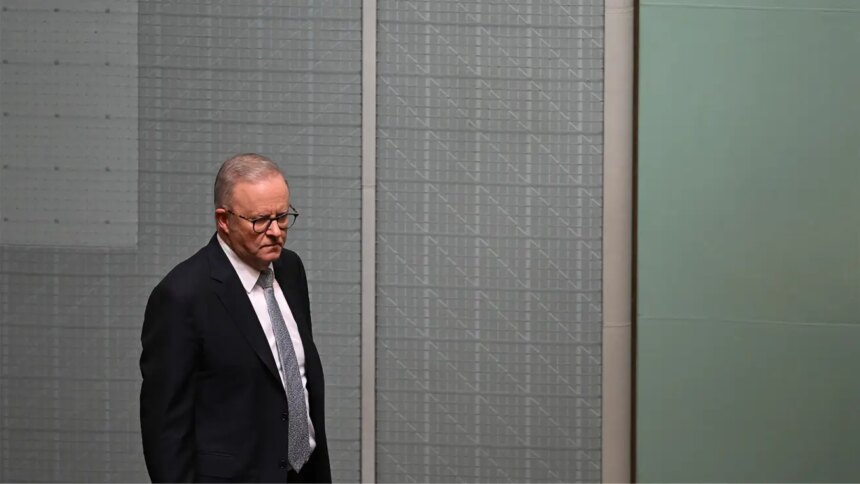
Nonetheless, the temptation after 2025 is to give in to recency bias and believe that, however poor Labor’s fortunes currently look in the middle of this term — its primary vote is below 27%, according to William Bowe’s authoritative BludgerTrack poll aggregator — Anthony Albanese will turn it around in the lead-up to the next election, just as he lined up and then demolished Peter Dutton over the course of the first three months of last year. Albanese, proverbially, likes to kick with the wind in the second half, and being underestimated is his superpower.
But as the subsequent career of Howard also showed, the most recent election doesn’t count for much. Howard’s prodigious success in 2004 — 87 seats and control of the Senate — meant nothing in 2007, and certainly not to the good folk of Bennelong, who abruptly dispensed with his services. Howard’s problems in 2007 included inflation running hot, forcing the Reserve Bank to lift interest rates, famously during the election campaign itself.
That doesn’t seem likely to be a problem for Albanese in 2028, because it’s a problem for him right now. The RBA is likely going to clobber the economy with another rate rise next week. That may or may not be the end of the rate hikes, but there’s an expectation that late 2027 will see rate cuts as inflation cools, especially if the government reins in its exorbitant spending. Whether or not Albanese can kick with that particular wind is going to depend on how much damage the rate hikes do to employment over the course of 2027, and how badly Labor’s reputation for economic management is tarnished over the next nine months.
Albanese’s, and Labor’s, broader problem is that it is not an adroit and thoughtful government but a managerial one geared to business-as-usual. You can see Albanese being a perfectly fine prime minister if economic conditions were normal, geopolitics was a continuation of post-Cold War norms, and technology wasn’t radically altering society beneath our feet. But it’s his bad luck to be prime minister at the single most disruptive and dislocative time for Australia at least since World War II, and he has visibly struggled to respond.
Related Article Block Placeholder
Article ID: 1270643

His government has failed on domestic sources of inflation (with Treasurer Jim Chalmers left to carry the can for a failure that belongs to the whole cabinet), failed on climate action, failed on the budget and failed in responding to the transformation of the United States into a major economic and security threat to Australia. It has tried, unsuccessfully, to regulate the malignant impacts of big tech when it comes to social media, but appears eager to embrace the potentially far worse impacts of AI.
Meanwhile, it ended a lost decade on decarbonisation of the energy grid, but progress remains painfully slow. It has shifted Australia slightly in a pro-Palestine direction, but failed to call out Israel’s genocide or take meaningful action against it. It has made some modest but meaningful changes to the taxation system in favour of workers and younger Australians, but failed to address higher education policy debacles like the Job-Ready Graduates failure. Its greatest successes have been restoring relations with China while pursuing a stronger set of relationships with Pacific and regional partners, especially Indonesia and Japan, thereby cleaning up much of the foreign policy mess inherited from the disastrous Morrison era.
What is still missing after four and a half years of Albanese, however, is a sense of what his government is actually trying to achieve. Perhaps it’s an unfair question. No-one ever asks what Coalition governments try to achieve — since the Howard years, they have simply been mechanisms to turn political donations and lobbying prowess into policy outcomes for favoured industries and friends. But Labor aspires to something better, or so it tells us. Albanese-era Labor has tried some slogans with little success. It came to office peddling the “renewable energy superpower” line, but then got on with pursuing the status of fossil fuel superpower instead, and the phrase dropped out of its lexicon. Then there was “progressive patriotism”, which was all the rage in 2025 but has since faded away; only Pat Conroy, minister for wasting the defence budget on local content, continues to trot it out regularly. Perhaps he missed the memo.
We wouldn’t be wrong in blaming Albanese, the one-time left-wing firebrand transformed into a steady-as-she-goes manager, for this lack of direction. But in truth, it’s Labor itself that has lost its way, perhaps even its soul. The current frontbench is the weakest Labor has fielded for generations, and few prospects are coming through who suggest a bright future. Quality ministers with any sort of capacity to think for themselves, like Mark Dreyfus or Ed Husic, get a knife in the back for their trouble. These days, even the Bill Shorten years, Lord help us, look like a golden time of policy ambition.
Albanese may indeed come home strong over the second half of this term and rack up a third term, but for what end? Perhaps Labor’s mid-term malaise isn’t just about the cost of living, but about something more fundamental that no focus group can provide.