Imagine you’re eight reps into a set of goblet squats in your living room. Your legs start to burn, your core is braced, and your focus remains sharply on finishing the set. But as fatigue sets in, an age-old uncertainty creeps in: Are my hips dropping below parallel, or am I cutting depth short? Is my lower back rounding under load? Am I doing this right?
For much of the past decade, mainstream consumer fitness technology has focused on quantification—tracking metrics such as steps, heart rate, workout duration, and calorie estimates. Those metrics can be useful for understanding activity and exertion, but they reveal far less about how a movement was actually performed: whether form changed as fatigue set in, whether squat depth shortened, or whether repeated movements stayed consistent from one rep to the next.
The Shift: From Tracking Workouts to Understanding Movement
That gap is helping shape a newer category of AI fitness technology. Instead of only recording indirect workout metrics, visual AI is beginning to help devices recognize supported exercises, track repetitions, and provide feedback when supported movement issues are detected.
The goal is not simply to create another stream of workout data. It is to make that data more useful during the workout itself and give independent exercisers more context about what happened once the session is over.
Introducing BodyPark ATOM

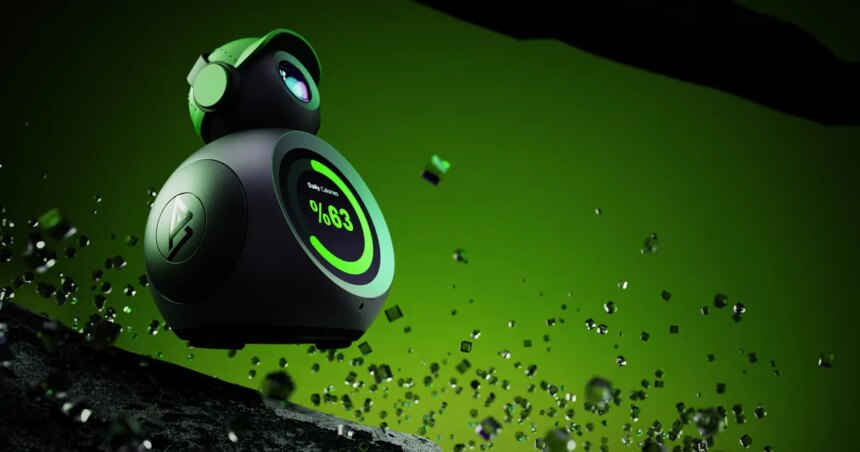
One example of this emerging technology comes from BodyPark, a tech brand focused on bringing actionable guidance into everyday training sessions. Its flagship product, BodyPark ATOM, is a pocket-sized AI fitness companion designed to help independent workout enthusiasts plan their exercise sessions and better understand how they’re moving.
The ATOM AI fitness companion weighs 155 grams. Its compact hardware includes a 160-degree ultra-wide-angle camera with adjustable tilt, a 1.43-inch round AMOLED display, built-in speaker and microphone, a physical camera cover, USB-C charging, magnetic mounting, and standard tripod compatibility.
ATOM has also drawn recognition for both its design and early market interest. It received the Red Dot Award: Product Design 2026, with the jury recognizing its clearly structured design and the way it presents movement analysis and feedback in an easy-to-understand form. According to BodyPark, ATOM also became Kickstarter’s No. 1 AI fitness project by backer count, attracting 2,587 backers and raising more than $650,000.
Supporting the Full Workout Journey

PlayStation 6 leaks and rumors: Everything we know about Sony’s next-gen gaming console
ATOM is designed to support independent athletes across multiple phases of a workout. The idea is to give exercisers more feedback during supported movements, helping them better understand how a workout is being performed rather than simply recording that it happened. Here’s how ATOM approaches each stage:
- Planning Your Workout: BodyPark ATOM can create structured plans adapted to your long-term exercise goals, available free time, home gym equipment, and training setting, helping reduce some of the decision-making before a workout begins.
- Workout Execution & Feedback: With the device positioned appropriately for the exercise and environment, ATOM can recognize supported movements such as squats, push-ups, lunges, and planks and automatically track repetitions and sets.
- Post-Exercise Review: Post-workout reports provide session summaries, movement performance analysis, video playback options, and training history. This can help you review your movement, identify areas for improvement, and plan your next session with more context.
Beyond core workouts, ATOM incorporates everyday lifestyle features, including OneSet quick training modes, LifeScale progress tracking, and NeckUp, a lightweight daily posture and focus aid designed for desk work and not intended as a medical device.
A Complement to Human Coaching

AI-assisted hardware is designed to complement existing training tools rather than replace human coaching. A qualified human coach can still bring context, individualized judgment, accountability, and hands-on observation that AI hardware cannot fully replicate.
Instead, compact AI companions can provide an additional layer of support for people who already exercise and regularly train independently. BodyPark ATOM and similar devices can offer accessible feedback, create structured AI workout plans, and provide information about supported movements while you’re training on your own. For solo exercisers, that can mean clearer workout plans and more information about how individual movements are being performed.