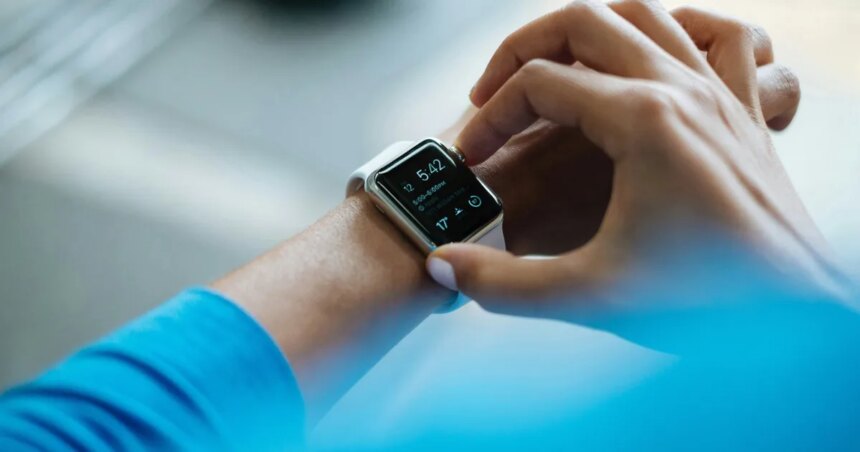
If you have ever worked outside on a hot day, you know how much you sweat. In 2023, Associate Professor Isao Shitanda and his team at Tokyo University of Science built a chloride sensor that could be heat-pressed onto T-shirts and wristbands. Their latest device, detailed in a study published online in ACS Omega, is a wristwatch that measures sodium and potassium in sweat in real time.
Why is reading sweat harder than it sounds?
Many wearable ion sensors read a voltage that rises or falls with the level of a particular ion in sweat. That voltage only makes sense when compared against a stable reference electrode, and conventional printed ones take quite a while to settle. Nobody wants to wait for their watch to warm up.

According to Tokyo University of Science, Shitanda’s team fixed this with a printed reference electrode that skips the long setup. Silica gel helps water seep into its electrolyte layer, so the electrode stabilizes quickly.
A layer of fabric and superabsorbent fiber over the sensors soaks up sweat and moves it across the sensing area. The watch processes the readings, sends them wirelessly to a computer, and stores them on a micro-SD card.
How did it hold up on a construction site?
The researchers took the watch to an active construction site for its real-world test. One worker wore it during a regular workday that included breaks, meals, and drinking water, and the watch picked up sodium and potassium signals for roughly 2 hours and 45 minutes as the worker moved around. The readings were sent wirelessly to the computer and saved on the device too.
Is it ready for your wrist yet?
Not yet, since the researchers say precise sweat readings still need controlled sweating experiments and more validation. Dr. Shitanda sees the system as a starting point for tracking electrolytes in construction, manufacturing, sports, and outdoor activities without interrupting work or exercise. He also suggests combining it with sweat volume and water intake data for hydration support in hot environments, but that use hasn’t been tested.
RELATED COVERAGE: