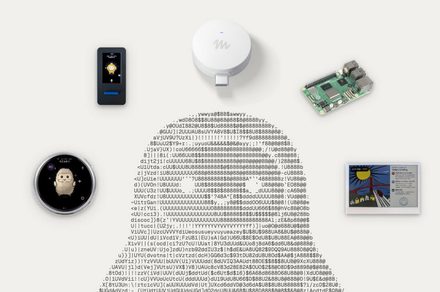
Meta has just announced that you can now build your own AI gadgets, similar to the Tamagotchi-inspired Muse Spark that it showcased a few days ago. The company has open-sourced the code that allows anyone to build a Muse agent-powered personal device. To that end, the company has released separate software development kits that support any off-the-shelf ESP32 board or Raspberry Pi kit.
Meta wants you to build the hardware
Meta has already shared numerous project ideas with details on how to build these new Spark-powered devices. One of them is based on ESP32-S3 hardware with a ~1.75-inch AMOLED display on top, similar to the company’s own Muse Charm gadget. Another idea is similar to an HDMI stick; it broadly wants you to install apps on it and let it take over your TV.
There are a handful of other formats. Some of them look like a remote control, while others pack a mini tablet-sized color E Ink display. One of those product ideas is Meta’s own Muse Home Link, which basically looks like a disc-shaped USB drive and can help you control a whole bunch of smart home devices. Meta says it is making 5,000 units of the Home Link, and they should be available in the coming weeks.
Surprisingly, all the units are free for new subscribers. If you are lucky, you just might get your hands on a unit. All you have to do is connect this device to your home Wi-Fi, and with conversational commands, Muse can let you perform tasks such as sending documents to your printer, controlling the lights, turning on the TV, and more.
There is a big caveat to all of this
But do keep in mind that as appealing as the whole idea sounds, it’s not for everyone. And when it comes to linking up an AI agent to your home network or giving it access to smart home sensors, or any other device that it supports, you must be cautious. Meta is not mincing any words around it either.
“It’s built by hackers, for hackers, just for fun. Side effects of tinkering may include bricked boards, voided warranties, brownouts, or bankruptcies. Proceed at your own risk,” says the company. The enthusiast community, however, is already building some interesting projects. Among them is Federico Viticci, who converted his ESP-based Xteink eReader into a Muse-powered pocket display.