Google has introduced Gemini 3.8 Flash TTS and Gemini 3.8 Flash-Lite TTS, two new text-to-speech models that are focused on improving how AI-generated speech sounds. They can create voices from descriptions, follow detailed speaking directions, handle two-speaker conversations, and keep those voices consistent across longer recordings.
For people using Gemini for narration, podcasts, audiobooks, or video voiceovers, the update gives much more control over the finished audio. Users can describe the kind of voice they want and tell Gemini how individual lines should be delivered.
You can tell Gemini how you want the voice to sound
Gemini 3.8 Flash TTS can create a voice from a natural-language description. Users can specify a character, accent, and other vocal qualities, or choose from more than 2,000 existing voices. The models support over 100 languages and dialects.
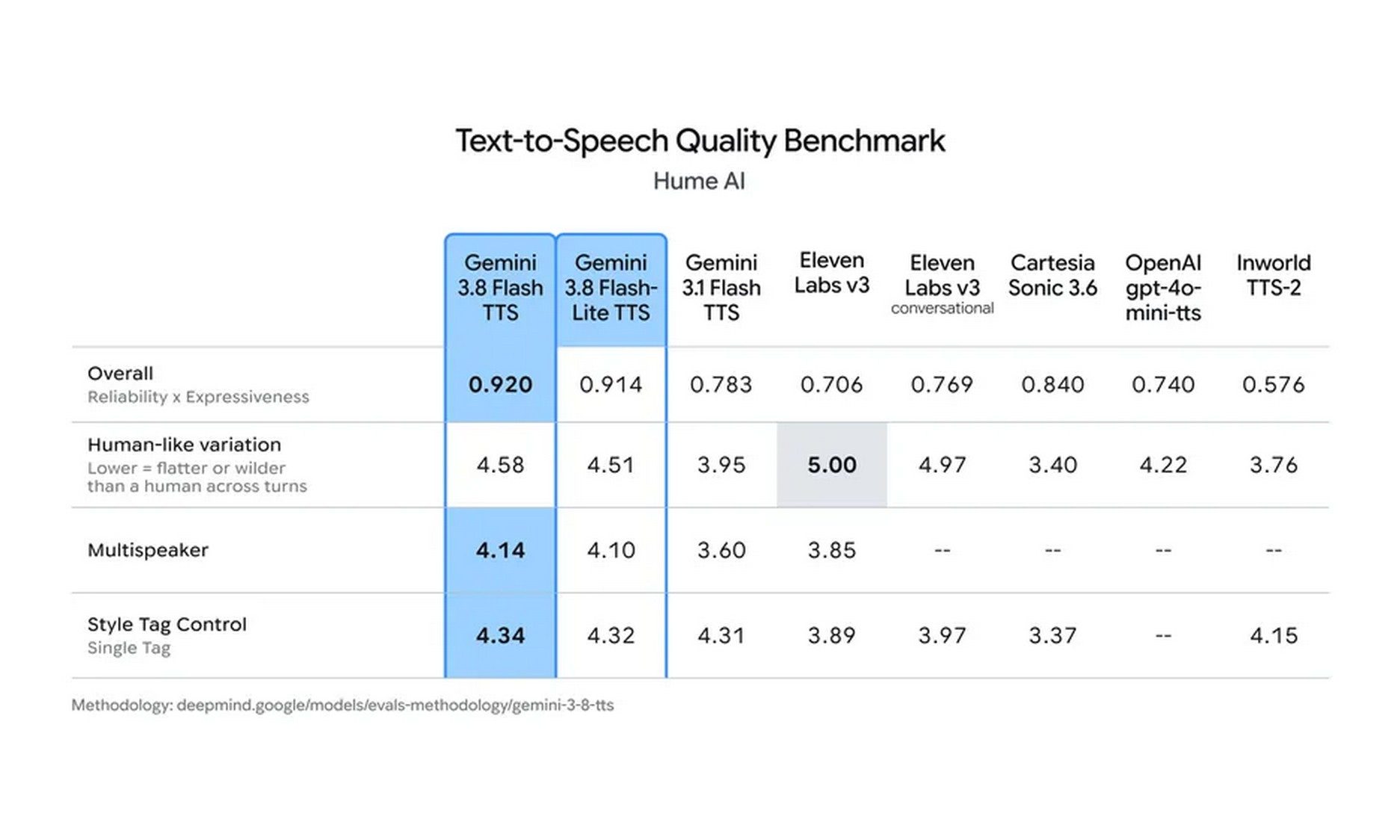
Instructions can also be added throughout a script. For example, a line can be whispered, spoken more slowly, delivered with a different emotion, or include laughter, sighs, gasps, and conversational reactions such as “mhm” or “yeah.” The update also allows for two-speaker conversations to be generated from a single script, while voices and pacing can remain consistent across longer recordings.
Custom voices can also be saved and reused across projects, which should help keep the same character or narrator from gradually sounding different. Google plans to add voice remixing later, allowing existing voices to be adjusted for pitch, pace, timbre, and accent.
Voice replication comes with some safeguards
Gemini can recreate a consistent vocal profile from a 30-second recording, but it cannot simply be given any voice sample. Google says the recording must belong to the user or be a voice they have the rights to use. The voice owner must also provide a separate verbal consent recording that matches the reference speaker before the replica can be created.
Generated Gemini Audio clips also carry an imperceptible SynthID watermark, while Google says voice replication includes C2PA credentials to help identify AI-generated material. Gemini 3.8 Flash TTS is rolling out through Gemini Notebook, the Gemini API, and Google AI Studio. The cheaper Flash-Lite model is coming to Google Vids and is designed for larger-scale jobs such as dubbing, narration, and voice agents.