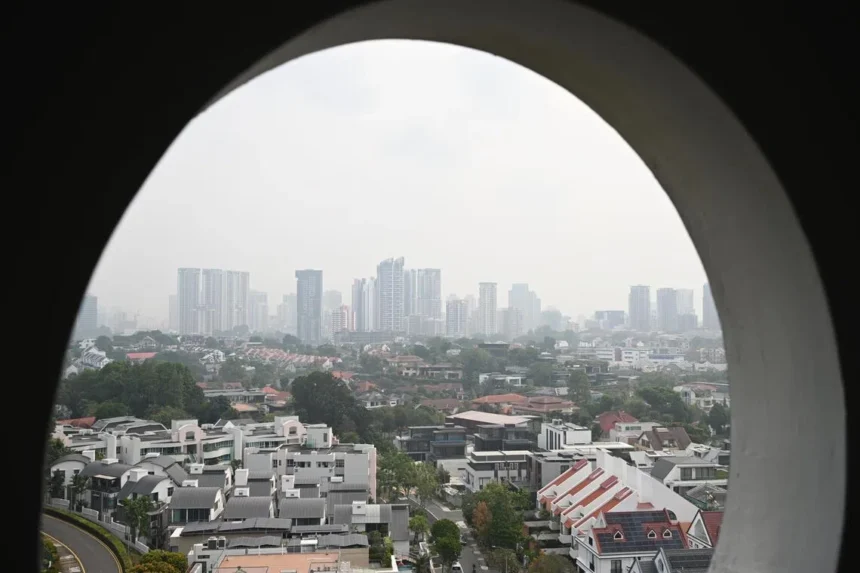
SINGAPORE – The air quality in Singapore has improved overnight with the 24-hour Pollutant Standards Index (PSI) in the central region of the island returning to the moderate range.
At 6am on Sept 18, the 24-hour PSI reading in the area was 97, within the moderate range of 51 to 100.
The central region includes the Thomson, Marymount, Sin Ming, Ang Mo Kio, Bishan, Serangoon Gardens, MacRitchie and Toa Payoh areas, according to the National Environment Agency’s (NEA) website.
The region’s 24-hour PSI dropped to 100 at 1am after hovering in the unhealthy range in the previous few hours.
The reading for that area hit 102 at 9pm, before inching up to 103 at 10pm, after a reprieve a day earlier, when readings across Singapore fell into the moderate range from 11am onwards.
The PSI for the central region stood at 102 at midnight.
Readings in the north, south, east and west have remained in the moderate range since Sept 16.
The PSI readings were 90 for the west, 80 for the east, 73 for the north and 69 for the south at 6am on Sept 18.
Hourly PM2.5 readings, which indicate the current concentrations of fine particulate matter, were in the normal band for all regions.
At at 6am on Sept 18, the hourly PM2.5 readings stood at eight in the south, 11 in the north, 18 in central, 20 in the east and 23 in the west.
The NEA has advised the public to refer to the hourly PM2.5 readings for immediate activities and 24-hour PSI ones to plan for the day ahead.
Air quality is considered unhealthy when the 24-hour PSI is in the range of 101 to 200, while an hourly PM2.5 reading between 56 and 150 indicates an elevated concentration of fine particles.
NEA has advised that during such periods, those who are healthy should reduce prolonged or strenuous outdoor activities, while vulnerable groups like the elderly, children and pregnant women, as well as people with chronic lung or heart disease, should minimise or avoid such outdoor activities altogether.