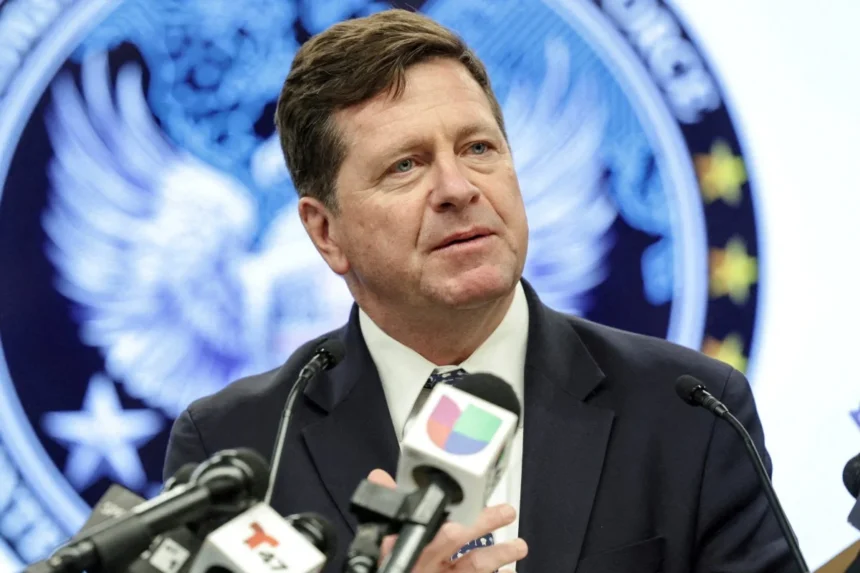
President Donald Trump has reportedly delayed a key Senate confirmation hearing for one of his intelligence nominees as the White House works behind the scenes to secure support for another politically significant appointment — a powerful federal prosecutor position that could influence some of the administration’s most important legal priorities.
The move underscores the increasingly complex political calculations shaping personnel decisions during Trump’s second term, where judicial appointments, law enforcement leadership positions, and intelligence posts are becoming central battlegrounds in Washington.
According to reports, the administration is attempting to manage multiple high-profile nominations simultaneously, balancing Senate politics, loyalty considerations, and long-term strategic goals within the federal government.
The decision has drawn attention because it involves two highly influential roles: a senior intelligence position responsible for national security matters and a federal prosecutor role with substantial authority over criminal investigations and legal proceedings.
Key Highlights
- Trump reportedly paused a confirmation hearing involving a senior intelligence nominee.
- The delay appears linked to efforts to secure another appointment for a powerful federal prosecutor role.
- Senate confirmation politics continue to shape staffing decisions.
- The administration is prioritizing trusted allies for key government positions.
- Critics argue the move reflects political maneuvering, while supporters say it demonstrates strategic planning.
- The episode highlights the importance of personnel appointments during Trump’s second term.
What Happened?
Reports indicate that the White House requested a delay in the confirmation process for a nominee seeking a senior intelligence position.
Rather than moving forward immediately with the hearing, administration officials reportedly shifted their focus toward securing Senate support for another candidate being considered for a powerful prosecutor role within the federal justice system.
The prosecutor position is viewed as particularly significant because it could oversee major investigations, corruption cases, public integrity matters, and other politically sensitive legal issues.
As a result, the administration appears to have concluded that obtaining the prosecutor appointment first was strategically more important than immediately advancing the intelligence nomination.
Why the Prosecutor Position Matters
Federal prosecutors hold some of the most influential positions in the American legal system.
Depending on the specific office involved, responsibilities may include:
- Supervising criminal investigations
- Directing federal prosecutions
- Managing public corruption cases
- Handling national security matters
- Coordinating with federal law enforcement agencies
- Representing the federal government in major legal proceedings
Because prosecutors possess substantial discretion regarding which cases move forward, these appointments often attract intense political attention.
For any administration, securing trusted leadership in such positions can be a major priority.
The Importance of Intelligence Leadership
The delayed nominee is reportedly connected to a senior intelligence-related role.
US intelligence officials play a critical role in:
- National security assessments
- Counterterrorism operations
- Cybersecurity monitoring
- Foreign intelligence collection
- Strategic threat analysis
Given rising tensions involving China, Russia, Iran, and other geopolitical challenges, intelligence appointments have become increasingly important to policymakers.
The delay therefore reflects the balancing act involved in filling multiple high-level government positions simultaneously.
Timeline of Events
Early 2026
The Trump administration began assembling leadership teams across intelligence, national security, and law enforcement agencies.
Spring 2026
Several key nominations moved through Senate committees as confirmation battles intensified.
Recent Weeks
Questions emerged regarding the timing of multiple White House nominations and confirmation schedules.
June 2026
Reports indicated that a scheduled intelligence confirmation hearing would be delayed while the administration focused on securing support for a prosecutor appointment.
Ongoing
Senate negotiations continue as the White House works to advance both nominations.
Why Senate Confirmations Matter
Many senior federal officials require Senate approval before taking office.
The confirmation process allows lawmakers to:
- Review qualifications
- Conduct background examinations
- Question nominees publicly
- Evaluate potential conflicts of interest
- Assess policy positions
While confirmations often proceed smoothly, politically sensitive appointments can become contentious and highly strategic.
Presidents frequently coordinate the timing of nominations to maximize their chances of success.
The Politics Behind High-Level Appointments
Personnel decisions are among the most important powers available to any president.
Experienced political strategists often consider:
Loyalty
Presidents frequently prefer appointees they trust to implement policy priorities.
Senate Support
Even highly qualified nominees can face obstacles if sufficient political support is lacking.
Timing
The order in which nominations move through Congress can influence outcomes.
Policy Goals
Appointments can shape the direction of agencies for years.
The reported delay appears to reflect these broader political calculations.
Reactions From Supporters
Supporters of the administration argue that careful management of nominations is both common and necessary.
They contend that:
- Strategic sequencing improves confirmation prospects.
- Important positions should be filled by qualified individuals who support administration priorities.
- Delays are routine in complex Senate negotiations.
- The administration is simply ensuring key posts are filled effectively.
Many allies note that previous administrations also adjusted confirmation schedules to accommodate political realities.
Criticism From Opponents
Critics argue that delaying one nomination to advance another risks politicizing important government institutions.
Opponents contend that:
- Intelligence appointments should proceed independently of political considerations.
- Law enforcement leadership should remain insulated from partisan calculations.
- Confirmation delays can disrupt agency operations.
- Strategic maneuvering may undermine public confidence.
Some lawmakers have called for greater transparency regarding the reasons behind the delay.
Why This Story Matters
While personnel decisions rarely attract the same attention as major legislation or international crises, they often have long-lasting consequences.
The individuals chosen to lead intelligence agencies and federal prosecutor offices can influence:
- National security policy
- Criminal investigations
- Federal law enforcement priorities
- Government oversight efforts
- Interagency coordination
As a result, confirmation battles frequently reveal broader political and policy priorities inside an administration.
Expert Analysis: Personnel Is Policy
Political observers often repeat a well-known phrase in Washington: “Personnel is policy.”
The idea is simple: the people selected to run agencies frequently determine how government policies are interpreted, implemented, and enforced.
For Trump, staffing key positions with trusted allies remains a central objective of his second administration.
The reported delay suggests the White House is willing to carefully manage confirmation timelines to ensure its preferred candidates obtain influential positions.
Whether that strategy succeeds will depend largely on Senate negotiations, political alliances, and the willingness of lawmakers to support the administration’s nominees.
Frequently Asked Questions
Why was the hearing delayed?
Reports indicate the administration wanted to focus on securing another nomination involving a powerful federal prosecutor position.
What role does the Senate play?
The Senate must confirm many senior government officials before they can assume office.
Why is the prosecutor position important?
Federal prosecutors oversee major criminal investigations and legal proceedings, giving them significant influence within the justice system.
Does this affect national security?
The delayed position reportedly involves intelligence responsibilities, making the timing of the appointment relevant to national security leadership.
Is it unusual for nominations to be delayed?
No. Administrations frequently adjust confirmation schedules based on political and strategic considerations.
Conclusion
President Donald Trump’s reported decision to pause an intelligence nominee’s confirmation hearing while prioritizing a powerful federal prosecutor appointment highlights the high-stakes personnel battles shaping Washington in 2026. Although confirmation delays are not uncommon, the episode underscores how strategic calculations, Senate politics, and loyalty considerations continue to influence the administration’s approach to staffing key government positions.
As negotiations continue, both appointments will be closely watched because of their potential impact on national security, law enforcement, and the broader direction of Trump’s second-term agenda.
Sources
- South China Morning Post (SCMP)
- Congressional records
- White House statements
- Senate committee proceedings
- US political and legal affairs reporting