US and Allies Explore Maritime Security Measures to Reopen Key Global Shipping Route
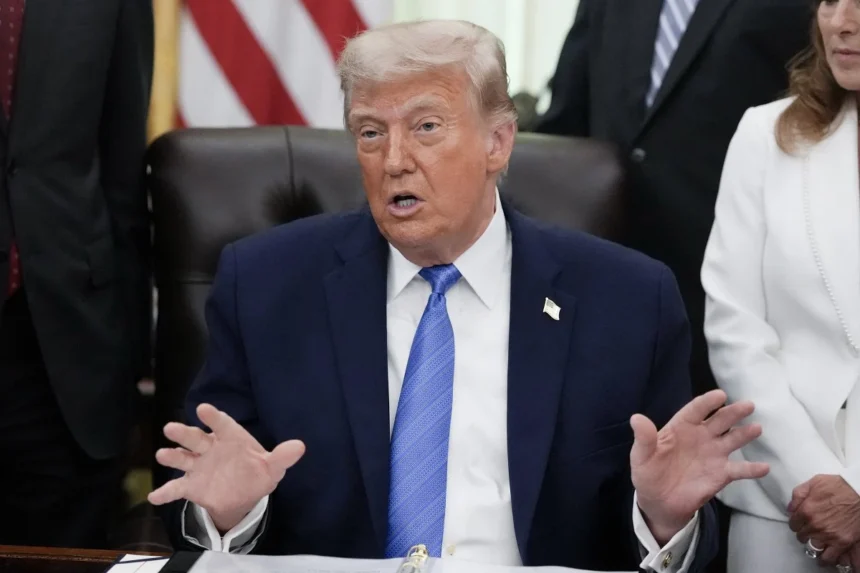
US President Donald Trump is expected to hold discussions on a proposed operation to clear mines from the Strait of Hormuz during the upcoming G7 summit, as Washington and Tehran move closer to a potential peace agreement aimed at ending months of regional tensions.
The planned talks come at a critical moment for global trade and energy markets. With diplomatic efforts showing signs of progress, international leaders are increasingly focused on restoring safe navigation through one of the world’s most important shipping corridors. Reports indicate that the United States and its allies are examining ways to quickly reopen the strategic waterway if a peace agreement is finalized.
Strait of Hormuz Remains Vital to Global Trade
The Strait of Hormuz is considered one of the most strategically important maritime routes in the world. A significant portion of global oil and natural gas exports pass through the narrow channel connecting the Persian Gulf to international markets.
Any disruption in the strait can have immediate consequences for energy prices, shipping operations, and global economic stability. Since tensions escalated in the region earlier this year, governments and businesses have closely monitored developments affecting maritime traffic.
The reopening of the route has become a major objective of ongoing diplomatic negotiations, with policymakers viewing uninterrupted shipping access as essential for restoring confidence in international markets.
Demining Operation Under Consideration
According to reports, the United States, the United Kingdom, and France are discussing a coordinated effort to remove naval mines and other hazards that could threaten commercial shipping once a peace agreement is implemented.
European allies are reportedly seeking support from President Trump for a Europe-led demining mission that could be deployed shortly after a formal agreement is reached. The proposal would allow allied naval forces to begin clearing shipping lanes and ensuring vessels can safely transit through the waterway.
Officials believe such an operation would help restore freedom of navigation and reduce risks for international shipping companies that depend on the route for transporting energy supplies and commercial goods.
G7 Summit to Focus on Regional Stability
The issue is expected to feature prominently during discussions at the G7 summit, where leaders from the world’s largest advanced economies will examine the broader security implications of developments in the Middle East.
In addition to meetings with G7 leaders, Trump is reportedly scheduled to hold talks with several Middle Eastern leaders. These discussions are expected to focus on regional security, economic stability, and the implementation of any future agreement involving Iran.
Diplomatic sources suggest that maritime security and the future of the Strait of Hormuz will be among the most important topics on the agenda.
Peace Negotiations Show Signs of Progress
The planned discussions on demining efforts coincide with growing optimism surrounding negotiations between Washington and Tehran.
Senior US officials have recently expressed confidence that a peace agreement could be finalized in the coming days. Reports indicate that negotiators have made progress on several major issues, including maritime security, economic measures, and frameworks for future diplomatic engagement.
While neither side has officially announced a final agreement, officials involved in the process have described the talks as being in their final stages.
Iranian representatives have adopted a more cautious tone, emphasizing that discussions remain ongoing and that several important details still require resolution before any formal signing can take place.
Challenges Remain Despite Optimism
Despite encouraging diplomatic signals, challenges remain.
Military incidents have continued in and around the Strait of Hormuz, highlighting the fragile security environment. Recent reports of drone interceptions and maritime security operations demonstrate that tensions have not completely disappeared, even as negotiators work toward a settlement.
Security experts warn that reopening the waterway will require more than political agreements. Mine-clearing operations, verification measures, and ongoing naval coordination may be necessary to ensure long-term safety for commercial shipping.
Some analysts also note that demining efforts could take weeks or even months depending on the extent of maritime hazards present in the region.
Impact on Global Energy Markets
Investors and energy traders are watching developments closely because the Strait of Hormuz plays a crucial role in global oil transportation.
A successful peace agreement combined with a coordinated demining operation could significantly reduce uncertainty in energy markets. Lower security risks would likely improve shipping conditions, stabilize supply chains, and reduce concerns about potential disruptions to global oil exports.
Financial markets have already responded positively to reports suggesting that diplomatic progress is being made. Many analysts believe a reopening of the strait could provide additional support for global economic stability in the months ahead.
What Happens Next?
The upcoming G7 summit may prove to be an important milestone in determining the future of both the peace negotiations and maritime security efforts in the Gulf region.
If diplomatic momentum continues, leaders could begin preparing for practical measures that would support the implementation of any agreement, including mine-clearing operations and coordinated security arrangements.
For now, the international community remains focused on whether ongoing negotiations can be converted into a formal peace deal. Should that happen, discussions on reopening and securing the Strait of Hormuz are likely to become a top priority for governments seeking to restore stability to one of the world’s most critical trade routes.