Legal Defeat Ends Effort to Keep Former President’s Name on Historic Arts Institution
The John F. Kennedy Center for the Performing Arts has removed Donald Trump’s name from its building and official materials after a federal court rejected a last-minute effort to delay a court-ordered reversal of the controversial renaming.
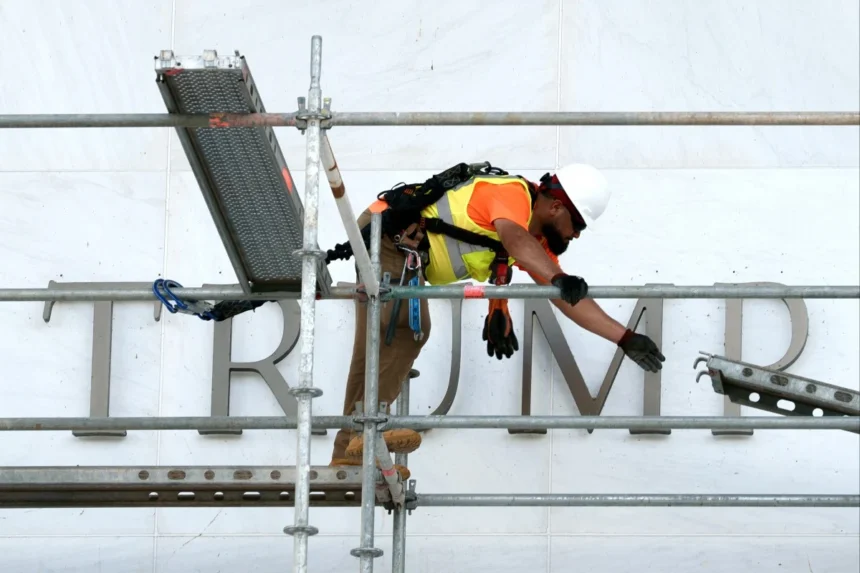
The decision marks the latest chapter in a high-profile legal and political battle over the identity of one of America’s most recognizable cultural institutions. Workers began removing Trump’s name from the Washington, D.C. landmark after a judge refused to grant additional time for the Kennedy Center and its leadership to challenge the ruling.
The move follows months of controversy surrounding a decision by a Trump-aligned board to add the former president’s name to the institution, creating what became known as the “Trump Kennedy Center.” Critics argued the change violated federal law, while supporters defended it as recognition of Trump’s influence on the organization.
Court Rules Only Congress Can Change the Name
At the center of the dispute was a federal court ruling stating that the Kennedy Center’s name is established by law and cannot be changed without congressional approval.
The institution was created as a national memorial honoring President John F. Kennedy and has carried his name since its establishment. The court determined that the board lacked the legal authority to alter that designation independently.
In rejecting the final appeal, the judge concluded that the legal arguments presented by Kennedy Center officials were unlikely to succeed and that there was insufficient justification to delay enforcement of the ruling.
As a result, the organization was required to remove references to Trump from its physical signage, digital platforms, and official communications.
Workers Remove Signage From Building
Following the court’s decision, crews began the process of removing Trump’s name from the center’s exterior.
Scaffolding was erected around portions of the building as workers carried out the operation. The removal process attracted public attention, with onlookers gathering near the site to witness the historic change.
Officials later confirmed that all signage associated with the renaming had been removed in compliance with the court order. The institution also updated its website and other materials to reflect the restoration of its original name.
The removal effectively ends one of the most visible examples of political branding attached to a major federal cultural institution in recent years.
How the Controversy Began
The dispute originated after the Kennedy Center’s board voted to incorporate Trump’s name into the institution’s title.
The decision came after significant changes to the organization’s leadership structure. Supporters of the renaming argued that Trump’s role in reshaping the institution justified the move, while opponents contended that the action ignored federal law governing the center’s status as a memorial to President Kennedy.
The renaming quickly sparked legal challenges from lawmakers and critics who maintained that Congress alone possesses the authority to alter the institution’s official designation.
The issue soon evolved into a broader debate about presidential influence over national cultural institutions and the limits of executive power.
Political and Cultural Reactions
The controversy generated strong reactions from across the political spectrum.
Supporters of the court’s decision argued that preserving the original name protects the Kennedy Center’s historical purpose and ensures compliance with federal law. Many viewed the ruling as an affirmation of congressional authority over national memorials.
Others criticized the decision, arguing that the board should have greater flexibility in determining how the institution is managed and represented.
The dispute also fueled wider discussions about the role of politics in arts organizations and whether cultural institutions should remain insulated from partisan battles.
Several artists, performers, and cultural organizations had previously expressed concerns about changes implemented during the leadership transition, contributing to heightened public scrutiny of the center’s future direction.
Broader Questions About Presidential Legacy
Beyond the legal arguments, the case has raised questions about how public institutions recognize political figures.
Presidential libraries, monuments, museums, and memorials have long served as ways of commemorating national leaders. However, naming active public institutions after sitting or recent political leaders remains far more controversial.
Analysts note that disputes over naming rights often reflect broader debates about history, political influence, and public memory.
The Kennedy Center case became particularly significant because the institution was originally established as a living memorial to President Kennedy, giving it a unique legal and symbolic status.
The court’s decision reinforces the principle that changes to nationally recognized memorials require congressional action rather than administrative decisions by appointed boards.
Impact on the Kennedy Center’s Future
While the legal battle over the name appears to be over, questions remain about the future direction of the Kennedy Center.
The institution has faced ongoing challenges involving leadership changes, programming decisions, funding concerns, and debates about its long-term mission.
Arts organizations and industry observers will be watching closely to see how the center rebuilds public confidence and navigates future controversies.
Some experts believe the resolution of the naming dispute may help the organization refocus attention on its primary mission of promoting performing arts and cultural education.
Others argue that the episode highlights the increasing intersection of politics and cultural institutions in the United States.
What Happens Next?
With Trump’s name now removed from the building and official materials, the Kennedy Center officially returns to operating solely under its historic name honoring President John F. Kennedy.
Although appeals and political criticism may continue, the court’s ruling establishes a clear legal precedent regarding authority over the institution’s name.
For now, the focus shifts from the courtroom back to the future of one of America’s most important cultural landmarks.
The case serves as a reminder that even symbolic changes to nationally recognized institutions can trigger major legal, political, and public debates when questions of history, authority, and national identity are involved.